Can I Just Replace Brake Pads and Not Rotors? How to Answer It on the Estimate
Yes, when the rotors measure in spec. The hard part for a shop is not the answer. It is getting the customer to believe the rotor line.
Quick answer. Yes. New pads can go on the old rotors when the rotors measure above the minimum thickness cast into them, run true, and have no deep scoring or heat damage. If they fail any of those, they get machined or replaced. For a shop, the answer is the easy part. The work is showing the customer why, with numbers, photos and a written yes.
- The rotor call is a measurement, not an opinion. The minimum thickness is stamped or cast on the rotor.
- Measure with a micrometer in six or more spots, and check runout with a dial indicator.
- Put the reading and the spec side by side on the estimate, with a photo of the reading.
- Offer pads only when the rotors pass. Write it down when they do not.
- Get the approval in writing, or record who said yes, when, and on what number.
The Plain Answer for the Customer at the Counter
We run a repair shop, and we write a lot of brake estimates. Here is the honest answer. Yes, you can replace brake pads and keep the rotors, as long as the rotors are still in spec. Rotors wear too, just slower than pads.
Every rotor has a minimum thickness, also called the discard number. It is stamped or cast into the rotor, and some aftermarket rotors have it laser etched on the side (Counterman, July 15, 2014).
A rotor above that number, running true, with a clean face, can take new pads. A rotor at minimum thickness has to be replaced (Brake & Front End, October 1, 2005). There is no gray area on that one.
The gray area is in between. A rotor can be thick enough but scored, glazed or a little out of true. That is the call customers think shops make up.
Why Customers Doubt the Rotor Line
They have heard it before. In a AAA survey, two in three US drivers said they did not trust repair shops in general. Of those, 76 percent named unnecessary recommendations as a reason (Repairer Driven News on the AAA survey, December 21, 2016).
That survey is old, but the feeling is not. In 2025, Cox Automotive found 45 percent of owners were unhappy with dealer service, mostly over surprise costs and poor communication (Cox Automotive, November 11, 2025).
The search results do not help much. On October 10, 2026, the top result for this exact question was a brake parts maker telling shops to put new rotors on with every set of pads (Wagner Brake). The page has no numbers and no way to measure. A doubtful customer reads that and hears a company that sells rotors saying buy rotors.
Our take. Always doing rotors is easy for the shop and costly for the customer. Never doing rotors brings the car back with a pulsing pedal. The fix for both is to measure, then show the measurement.
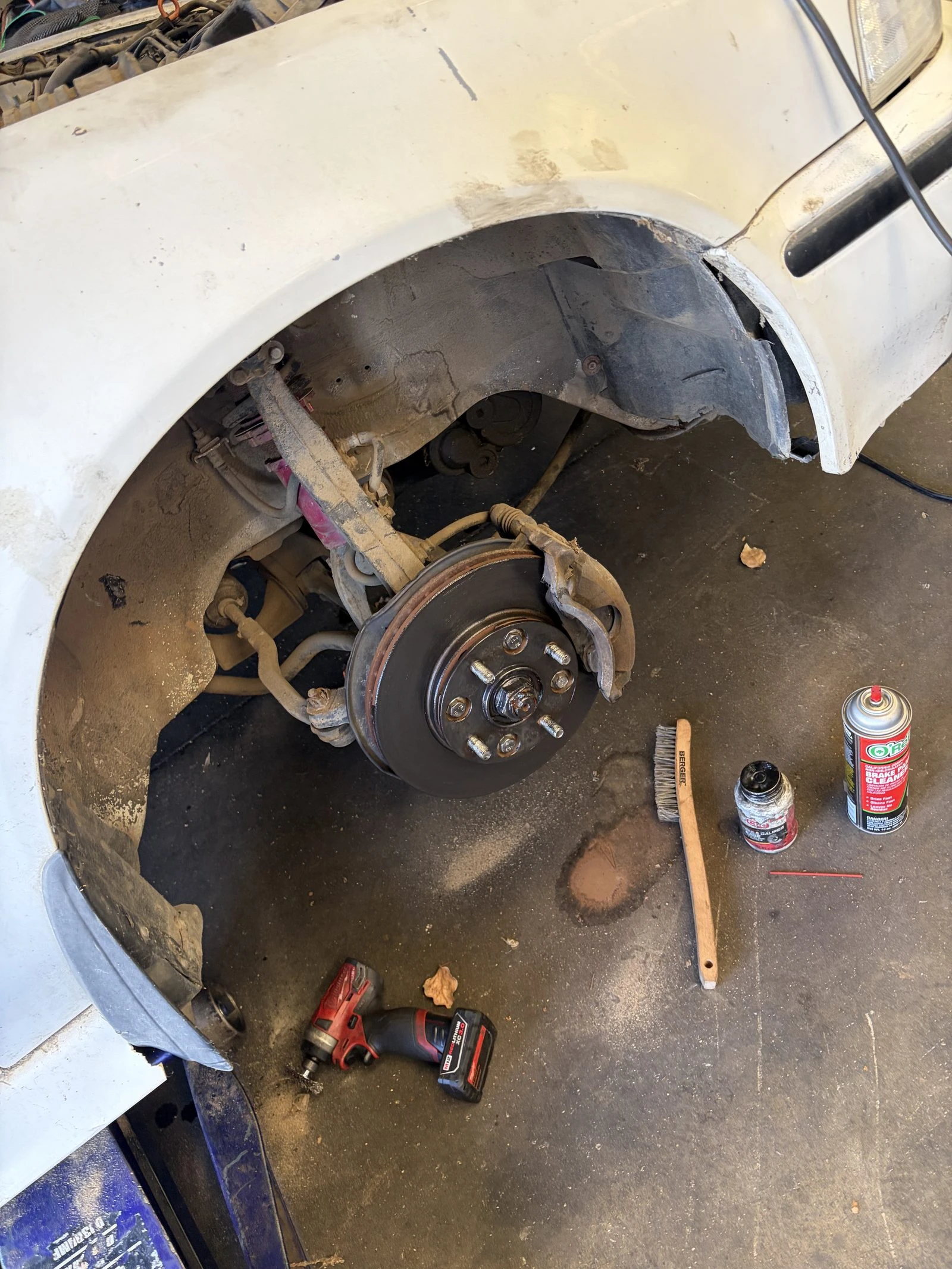
How to Measure So the Number Holds Up
None of this is new to a good tech. What is new is writing it down where the customer can see it. These are the checks the trade press lays out, in the order a tech does them.
- Find the minimum thickness on the rotor. If it is rusted over, look it up in the service data along with the thickness variation spec (Counterman)
- Measure thickness with a micrometer at six or more spots across from each other. A look alone cannot judge thickness, so compare the lowest reading to the spec for that car (A-Premium, March 27, 2026)
- Measure the deepest score with a pin anvil micrometer and take it off the thickness. If what is left is still above minimum, the rotor can be turned (Brake & Front End)
- Check thickness variation. The trade guide puts it between .001 and .003 inch. Use the maker's number when you have it (Counterman)
- Check runout with a dial indicator mounted on the knuckle, half an inch in from the edge, with the lugs torqued. Most cars call for .002 inch or less (Counterman)
- Look at the face for heat damage. Blue or dark spots on the friction surface mean the rotor got too hot (Brake & Front End)
Never skip runout. Counterman worked out that .003 inch of runout sweeps past the pads more than five million times in 6,000 miles. That is enough to wear in the uneven spots a driver feels as a pulse (Counterman). New pads on that rotor is the classic comeback.
Put the Numbers on the Estimate
Most estimates say replace front rotors, then a price. That line asks the customer to trust you. Change it to a line that shows them why.
| What you found | What goes on the line | What the customer learns |
|---|---|---|
| Above minimum, clean face, runout in spec | Pads only. Left rotor 26.4 mm, right 26.3 mm, minimum 25.0 mm. Runout in spec. | You checked, and it saved them money |
| Above minimum, scored | Turn rotors. Deepest score 0.3 mm. 26.0 mm left after, minimum 25.0 mm. | Why turning is still safe |
| At or under minimum | Replace rotors. Left rotor 24.8 mm, minimum 25.0 mm. | A number under the line, not an opinion |
| Runout out of spec | Replace or turn rotors. Runout .004 inch, spec .002 inch. | The reason the pedal pulses |
The readings in this table are a worked example, not a real car. Use the spec for the car on your lift.
Two rules make this work. First, write the reading and the spec side by side, so the customer can see the gap for themselves. Second, write the pads only line when the rotors pass, even on a slow week. That line is what earns you the next rotor sale.
Photos That Do the Selling for You
A number on paper is good. A photo of the micrometer reading it is better. Four shots cover almost every brake job.
- The minimum thickness on the rotor, close enough to read.
- The micrometer on the rotor with the reading in the frame.
- The rotor face under a work light held low, so scoring, the outer lip and heat spots show up.
- The old pad next to the new one, so the customer sees what wore out.
Send the photos with the estimate, not after. A customer who sees the reading before you call asks fewer questions on the call. Keep them with the job, too. They settle it if the customer comes back in six months with a noise.
Get the Yes in Writing
California spells out what this looks like. The Bureau of Automotive Repair says a written estimate must list the parts and labor before work starts, and the customer's okay has to be recorded on it first (BAR Write It Right, updated January 2026). For a phone okay, record the date, the time, the name of the person who said yes and the number you called. A text or email okay gets the same record with the number or address.
Rotors found mid job that were not on the first estimate follow the same rule. Write a revised work order with the added parts, labor and new total. Get the customer's okay. Note it on both the work order and the invoice (BAR). Other states have their own rules, so check yours. Working the California way is a safe habit anywhere.
Two more habits from the same guide help on brakes. If the customer asks for the old parts when they approve the job, they get them back. And the invoice lists each part in plain words, new or used, with no acronyms (BAR).
When a customer turns down rotors that failed, write that on the invoice too, with the reading. It protects the shop, and it is a fair record for the customer.
A Script for the Call
Numbers first, short sentences, and no pressure. Something like this.
- Your front pads are worn out. That part is not in question.
- I measured both front rotors. The left is 24.8 and the right is 25.1. The minimum stamped on them is 25.
- So the left one is under the line. I sent you a photo of the reading.
- I would do rotors with the pads. Both options and both prices are on the estimate I sent.
- If you want to wait on rotors, that is your call. I will note the reading on the invoice.
What This Does for the Shop
Shops that show the reading sell fewer rotors they should not, and more rotors they should. The customer who got a pads only job because you measured is the one who believes you next time the number is under the line.
Shop Desk is the software our own shop runs on, and it is free to start with no card. See Shop Desk for auto repair, or read how we came to build it.
Questions Shop Owners Ask
What happens if I just replace brake pads and not rotors?
If the rotors are in spec, nothing bad. The new pads bed in and the brakes work as they should. If the rotors are under minimum, scored deep or out of true, the new pads can wear unevenly, make noise or bring back a pulsing pedal. That is why the rotor gets measured, not guessed.
How long will new brake pads last on bad rotors?
There is no honest mileage figure for that. Wagner Brake says deep grooves can damage new pad material and old rotors can wear pads unevenly, so the pads will not last the way they should. Measure before the job instead of guessing after.
How do I know if a rotor needs to be replaced?
Measure it with a micrometer. If it is at or under the minimum thickness stamped or cast on it, replace it. If it is above, check runout, thickness variation and the face for deep scoring or heat spots.
Why don't people turn rotors anymore?
Wagner Brake says the trade has moved away from machining toward new rotors. Turning still works when the rotor will stay above minimum thickness after the deepest score is cut out, which is the test Brake & Front End lays out. When it will not, replace it.
Do I have to give the customer the old rotors?
In California, yes, if the customer asks for the replaced parts when they approve the work. Parts that go back as a core or under warranty are the exception, and the customer gets a chance to look at them instead, per the BAR Write It Right guide. Other states set their own rules.
Sources
- Counterman, Measure Rotor Thickness, Runout, Stop Pulsation Comebacks Before They Start, Andrew Markel, July 15, 2014
- Brake & Front End, Inspection by the Numbers, Gene Markel, October 1, 2005
- A-Premium, Can You Replace Brake Pads Without Rotors, March 27, 2026
- Wagner Brake, Why You Should Not Put New Brake Pads on Old Rotors, undated, read October 10, 2026
- California Bureau of Automotive Repair, Write It Right, updated January 2026
- Repairer Driven News, AAA Survey of Auto Repair Trust, December 21, 2016
- Cox Automotive, Service Industry Study release, November 11, 2025
Free plan, not a trial. No card. Your desk opens the minute you sign up.
Ask a Mechanic Who Uses It
Not ready to sign up? Tell us how your shop runs and what your software gets wrong today. One of us will call you back, and we will tell you straight if Shop Desk is not the right fit.
- A person reads it, usually the same day
- No sales sequence and no drip emails
- We run our own shop on this software
Rather email? Write to hello@yourshopdesk.com